
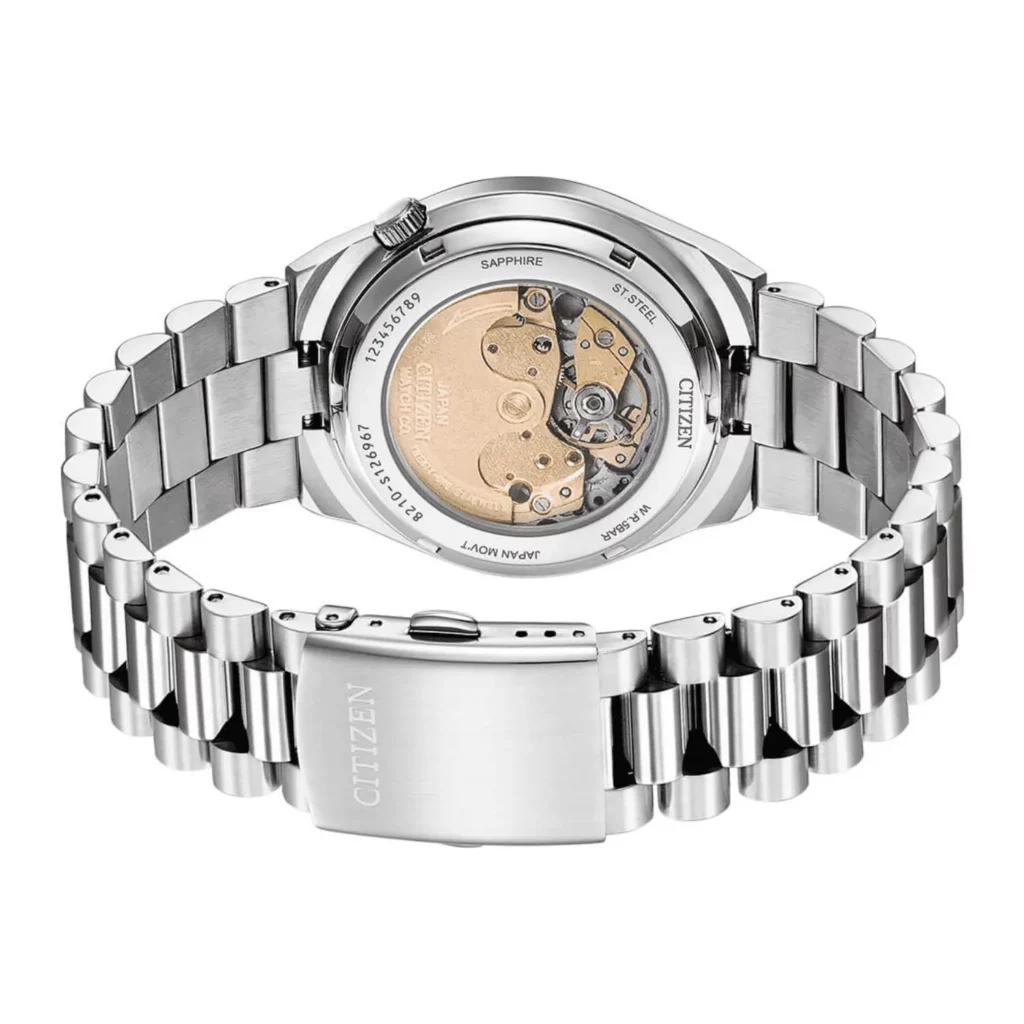
Quick take: A healthy mechanical watch is not a quartz watch. Day-to-day, most Japanese automatics from Seiko, Orient, and Citizen are happily inside roughly −20 to +40 seconds per day (often tighter once settled on the wrist). COSC chronometer grade is about +6/−4 s/day. If your automatic is outside a few minutes a week after normal wear, regulate or service it — do not expect smartphone precision.
Buyers in Australia often ask the same practical question after their first automatic arrives: how accurate should a mechanical watch be? The short answer is “good enough for daily life, not atomic-clock perfect.” This guide sets realistic expectations for Orient, Seiko, and Citizen mechanicals, explains what “seconds per day” actually means, and shows when drift is normal versus a red flag.
How accurate should a mechanical watch be?
Mechanical accuracy is measured as mean daily rate — how many seconds the watch gains or loses over 24 hours, averaged across positions and conditions. Temperature, how fully the mainspring is wound, and whether the watch spends the night dial-up or crown-up all change the rate.
Useful benchmarks (industry norms, not marketing slogans):
- Modern non-certified mechanical: about −10 to +30 s/day is common; many land better once broken in.
- COSC chronometer (mechanical): mean daily rate roughly +6 / −4 seconds per day under test conditions.
- Higher-spec Japanese mechanical (e.g. Grand Seiko “normal usage” targets): often quoted around −1 to +8 s/day depending on calibre family — still mechanical, still position-sensitive.
- Standard quartz: typically within about ±15 seconds per month; high-accuracy quartz is far tighter.
So if your Seiko 5 or Orient automatic gains 12 seconds one day and loses 5 the next, that can still be a normal mechanical life — especially in the first weeks while the oils settle and your wear pattern stabilises.
| Category | Typical daily rate (guide) | What it means for you |
|---|---|---|
| COSC chronometer | +6 / −4 s/day (test) | Certified precision; still not quartz |
| Quality non-certified mechanical | ~−10 to +20 s/day often | Fine for work and travel if checked weekly |
| Many Seiko 4R / NH and Orient F6x families | Factory windows often around −15/+25 to −35/+45 s/day | Spec is wide; real watches frequently run tighter |
| Citizen mechanical (Miyota-based etc.) | Similar mid-tier mechanical band | Same “check weekly” habit applies |
| Quartz / solar / kinetic (timekeeping) | Seconds per month, not per day | Choose these if absolute time is the priority |
Always treat manufacturer accuracy windows as a range, not a promise of the midpoint. A watch that stays inside its published window while you wear it is doing its job.
Seiko, Orient, and Citizen: what to expect on the wrist
These three brands dominate value mechanical buying in Australia. Accuracy culture is similar: solid, honest mechanical engineering without pretending every sub-$1,000 watch is a chronometer.
Seiko mechanical
Entry and mid Seiko automatics (Seiko 5 Sports, many Prospex divers with 4R-family calibres) are typically specified with relatively wide daily rates. In practice, a settled watch that lives on your wrist often tracks closer than the worst-case number on the spec sheet. For context on movement types, see our Seiko automatic vs Kinetic vs solar guide — Kinetic and solar are different power stories; accuracy expectations still track mechanical vs quartz architecture.
Browse live pieces under Seiko watches and automatic watches.
Orient mechanical
Orient’s in-house automatics (Bambino dress watches, Kamasu/Mako divers, and related sports models) are pure mechanical value plays. Expect the same “seconds per day, not per month” mindset. Dress pieces that sit still overnight may show more overnight drift than a diver you wear 12 hours a day — that is power-reserve and amplitude behaviour, not necessarily a defect.
Start with the Orient collection, including dress references like the Bambino RA-BB0001E30B and dive options such as the Kamasu RA-AA0818L19B.
Citizen mechanical and eco-drive contrast
Citizen sells both mechanical automatics and (more famously) Eco-Drive quartz. If your priority is “set it and forget the seconds,” Eco-Drive wins on timekeeping stability. If you want a beating balance wheel, buy mechanical and accept weekly time checks. Brand-level trade-offs are covered in Seiko vs Orient vs Citizen.
Why your mechanical watch gains or loses time
- Position: Crown-down vs dial-up overnight can shift rate by several seconds.
- Power state: A nearly empty mainspring is less stable than a fully wound automatic after a day of wear.
- Temperature: Hot car dashboards and cold winter mornings both move rate.
- Magnetism: Speakers, tablet covers, and bag clasps can make a watch run fast until demagnetised.
- Shock and service interval: Hard knocks and old oils push a healthy watch outside its comfort band.
Before you assume the movement is “bad,” wear the watch consistently for a week, wind or wear it fully each day, and log time against your phone at the same hour. One noisy day is anecdote; a seven-day average is data.
Is mechanical watch accuracy “good enough”?
For most people, yes. If you glance at your wrist for meetings, trains, and workouts, being within half a minute at the end of the week is rarely a problem. Photographers, pilots under strict briefings, and anyone timing medication to the second should own a quartz backup or use their phone.
Mechanical watches are bought for feel, finishing, heritage, and the pleasure of a living mechanism — accuracy is a performance band, not the whole product. Comparing Orient and Seiko on more than rate alone is worthwhile; start with Orient vs Seiko.
You want mechanical character
Pick an automatic and plan a Sunday time-set habit. Accuracy in the tens of seconds per day is normal.
Shop automatic watchesDress watch, calm rate habits
Bambino-style Orient dress automatics reward regular wear. Check them when you change shirts on Monday.
View Bambino RA-BB0006N30BSport diver that stays on the wrist
Daily-worn divers often regulate themselves into a stable personal rate. Kamasu and Seiko Prospex both fit that lifestyle.
Shop dive watchesStill choosing a Japanese brand
Accuracy bands overlap; decide on design, size, and service path instead of chasing one extra second.
Compare Seiko, Orient, CitizenAuthentic stock, inspected before dispatch. Free shipping Australia-wide on eligible orders. Covered by Chronospride’s 12 months warranty, handled by our team. See our authenticity and warranty page.
How accurate should a mechanical watch be day to day?
Most healthy modern mechanicals are fine if they stay within roughly half a minute over several days of normal wear. COSC-level pieces target about +6/−4 seconds per day under test; many non-certified Japanese automatics are specified wider but often run tighter on the wrist.
Why is my automatic watch gaining or losing time?
Position overnight, power reserve, temperature, magnetism, and service age all change rate. Log the error for a full week at the same time of day before deciding the watch needs regulation.
Are Seiko and Orient automatics less accurate than luxury brands?
Luxury chronometers are held to tighter certified bands. Seiko and Orient still deliver reliable mechanical timekeeping for daily wear; they are not designed to replace quartz when second-level precision is mandatory.
When should I have a mechanical watch regulated or serviced?
If average daily error is large enough to annoy you after consistent wear, or if the rate suddenly worsens, see a watchmaker. Sudden large gains often point to magnetism; large losses can mean low amplitude or dirty oils.
Should I buy quartz if accuracy is my top priority?
Yes. Quartz, solar, and many kinetic designs keep time far more tightly than a balance-spring automatic. Choose mechanical when you want the feel and engineering of a wound movement.